Cantus™
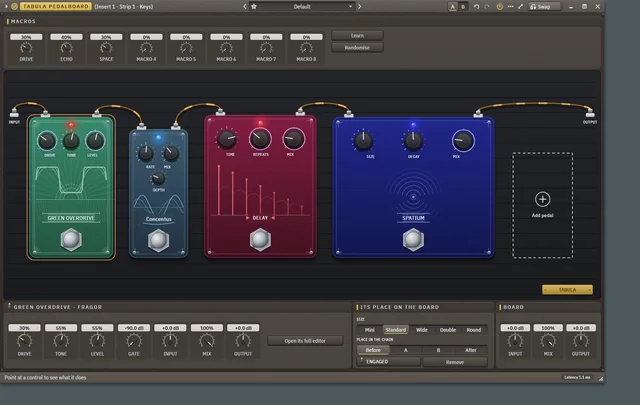
Spatium
A reverb whose decay you draw in seconds per frequency, with the measured decay shown beside it.
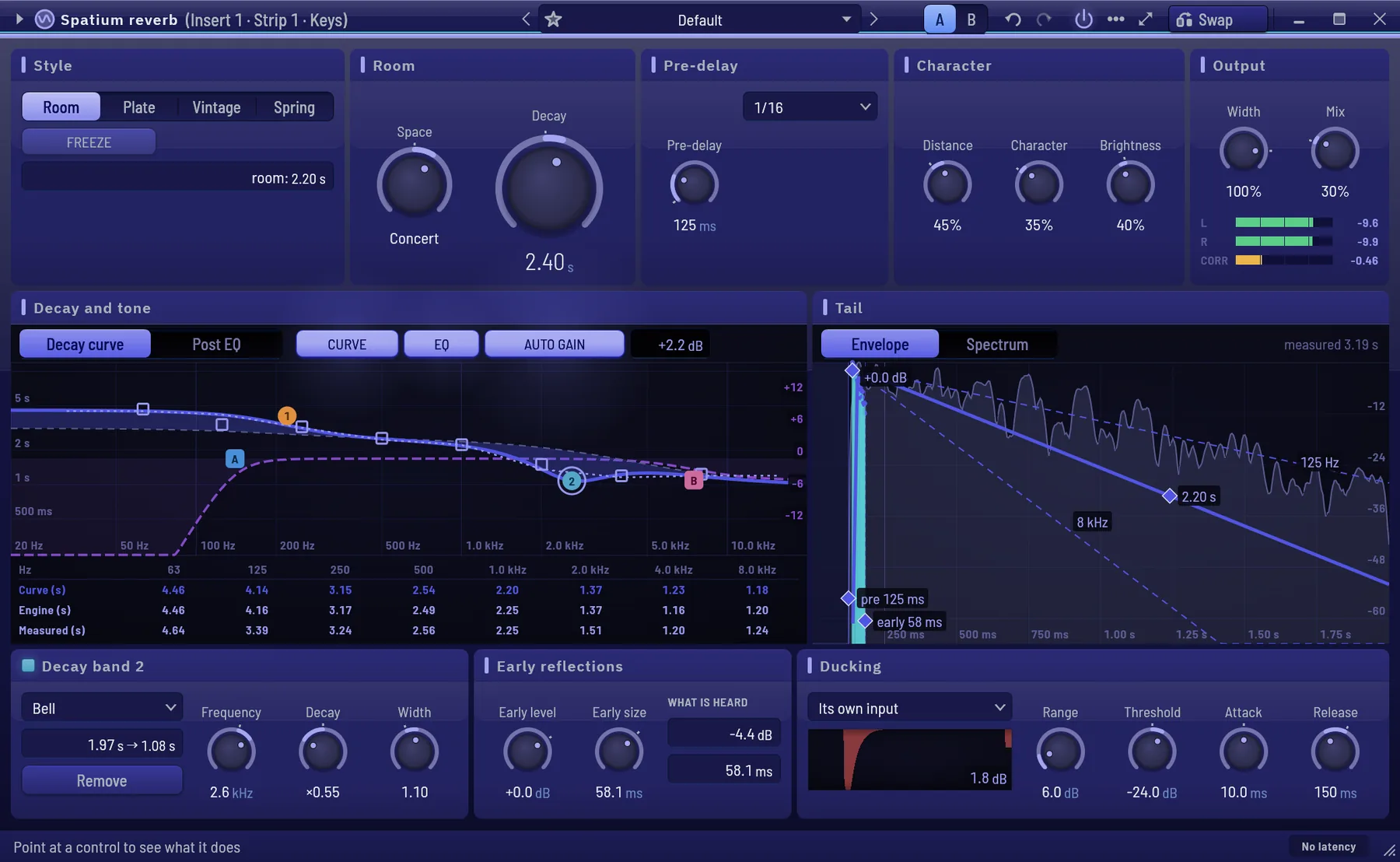
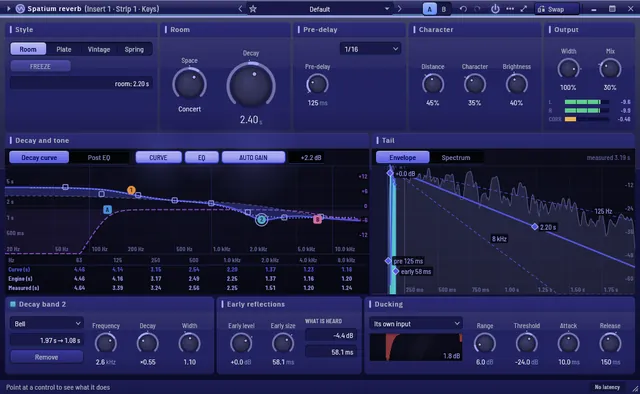
Spatium is a 16-line feedback delay network whose decay time is a curve you draw in seconds, with filters fitted so the tail follows it. The editor shows the curve you asked for, what the engine achieves and what was measured on the real tail, plus a time view with handles on the pre-delay, reflections and decay.
Hear it, with and without
Hear its presets
- Without the effecta spoken voice
- Without the effecta recorded drum kit, rock at 90 BPM
- Without the effecta recorded grand piano
- Vocal plateVocal — Pop, R&B
- Drum roomDrums — Pop, Rock
- Concert hallBus — Film · Game, Worship · Gospel
Rendered by Cantus from its factory presets, each matched to the dry take's loudness by a gain alone, with no processing after.
Voice: Britton Rea, public domain (Wikimedia Commons) · Drums: Gogodze Phu Vol. II by Karoryfer Samples, CC0, played by Cantus's Tympanum · Piano: Salamander Grand Piano V3 by Alexander Holm (FLAC edition by FreePats), CC BY 3.0, played by Cantus's Chorda
What stands out
- Twelve named rooms morphed by one Space control; the decay follows, in seconds
- Four styles: Room, Plate, Vintage and Spring
- Decay EQ on a seconds axis; per-octave table of curve, engine and measured
- Measured spectrogram of the real tail with the curve's −30 and −60 dB lines
- Shapeable early reflections, six-band post EQ and freeze; no latency
- Ducking with threshold, range, attack and release, keyed from any strip