Cantus™
Arca
Five valve amps modelled from their circuits and their cabinets — the valves glowing as hard as each one works, the microphone dragged across the speaker's cone.
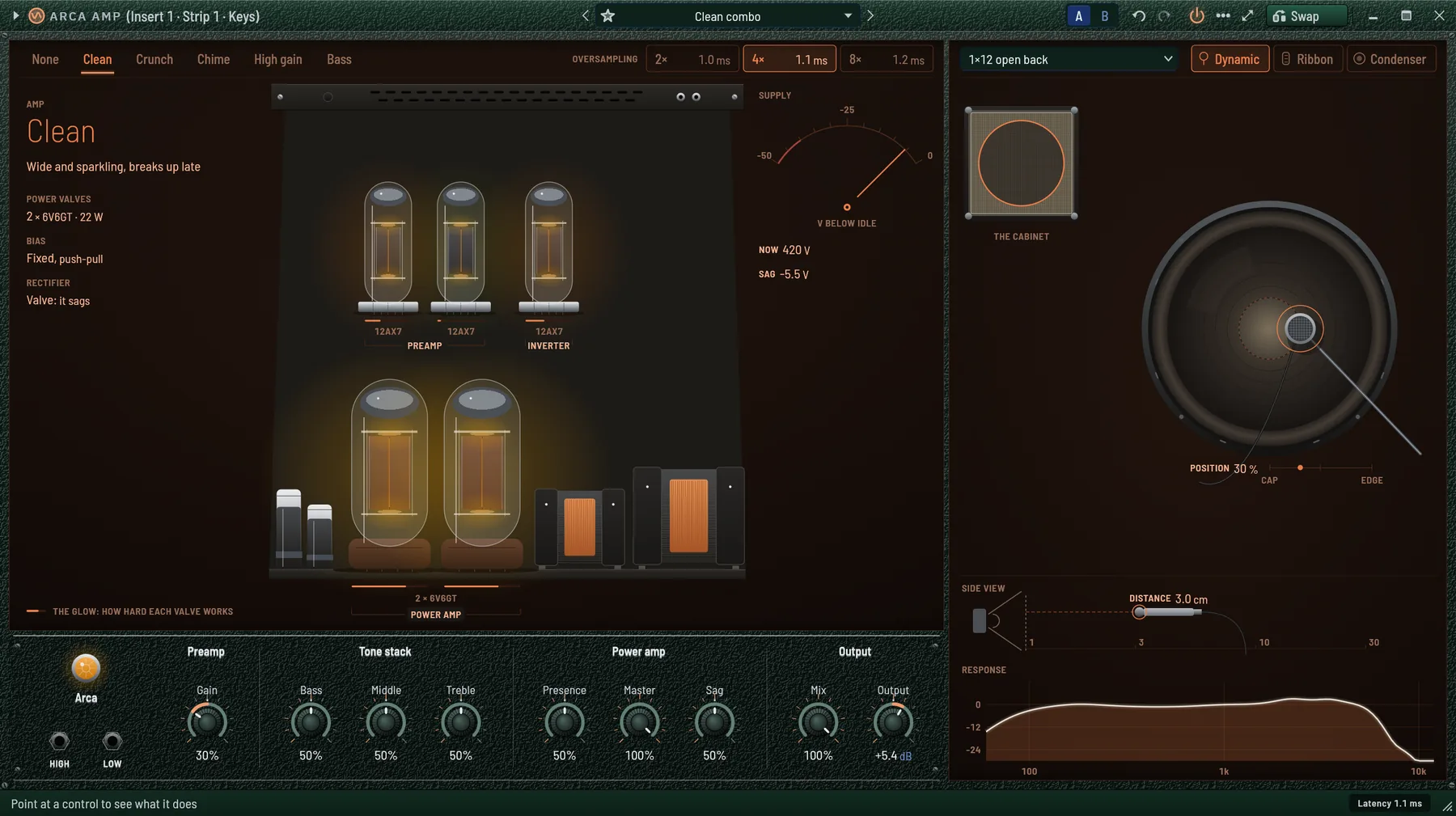
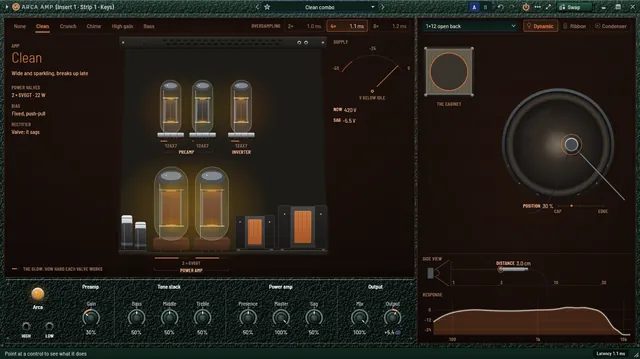
Arca solves each amp's schematic as a circuit, valve by valve: a clean amp, a crunch, a chiming class A, a four-stage high gain and a bass amp, with their tone stacks from their component values, their power amps pushing and pulling, the supply sagging under a loud chord. Its window is the amp: the chassis with its valves in the order the signal meets them, each glowing as hard as it works; the faceplate; and the cabinet, where the microphone is dragged across the cone and back from the grille, or your own impulse response plays. At its defaults — no amp, no cabinet — it passes the sound untouched.
Hear its presets
- Without the effectfour chords (Am, F, C, G at 90 BPM) on a DI electric guitar
- Chiming jangleCreative — Pop, Rock
- Rhythm crunchCreative — Rock
- Full stackCreative — Rock
- Tight rhythmCreative — Rock
Rendered by Cantus from its factory presets, each matched to the dry take's loudness by a gain alone, with no processing after.
Guitar: Carbonthief, CC0 (Strummed Guitar Chords, DI)
What stands out
- Five amps solved from their schematics, valve by valve, oversampled
- The supply sags under a loud chord; a sag knob from stiff to soft
- Five cabinets with the microphone's kind, place and distance, or your own impulse response
- The valves glow as hard as each one works
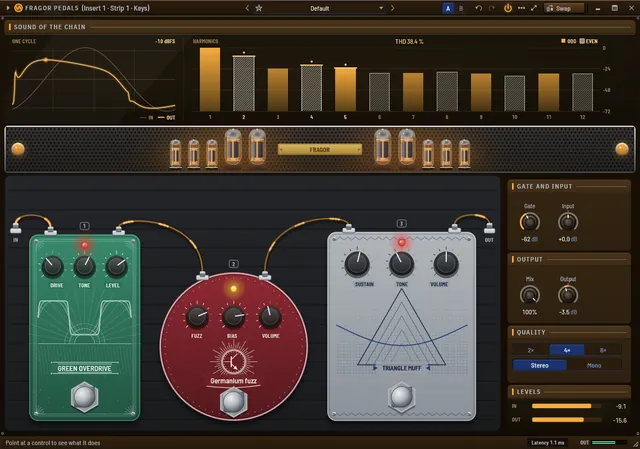
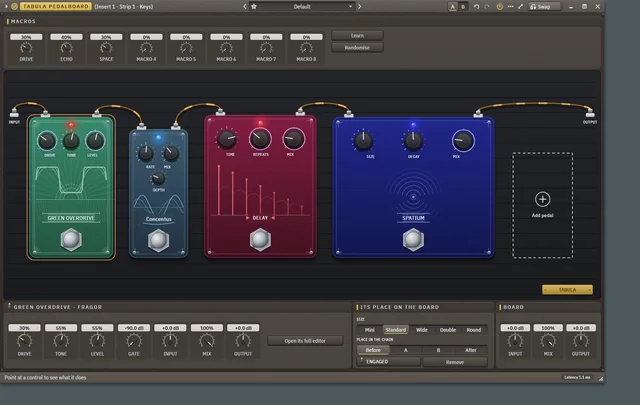
- For guitar, bass, keys and voice; a pedal on the pedalboard too
- Sixteen factory presets; nothing touched at its defaults
Try it
Choose a preset and play. Switch dry and wet while it plays: only the effect comes and goes.