Cantus™
Multiplex
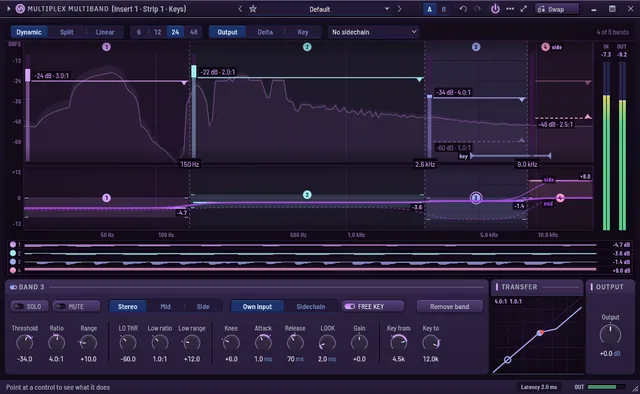
Up to eight bands that compress and expand on both sides, with thresholds dragged on the spectrum.
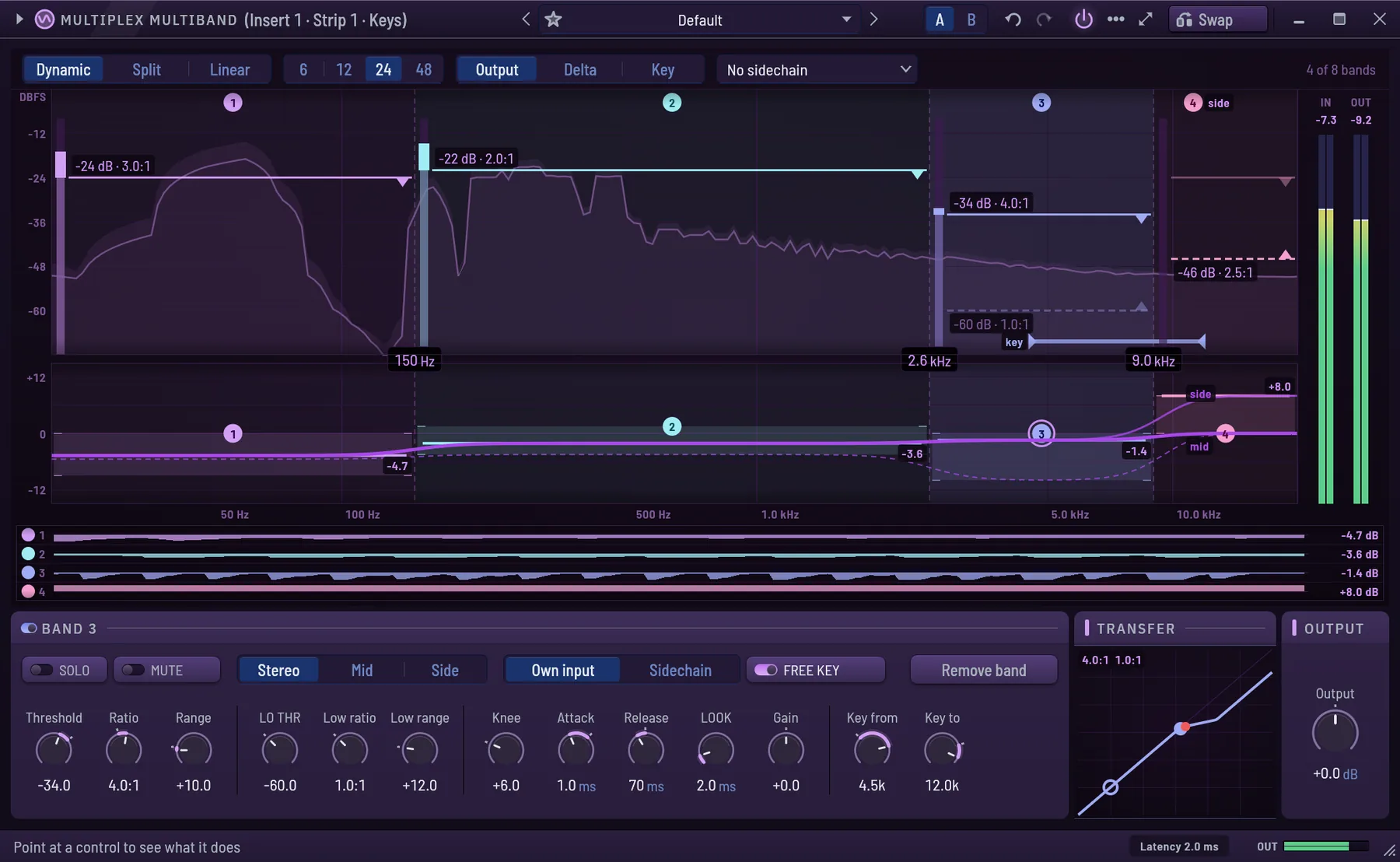
Multiplex splits the spectrum into up to eight bands, each with an upper and a lower threshold, so one band can hold its peaks down and lift its quiet parts at once. Bands work on stereo, mid or side, listen to their own signal or a sidechain from any strip, and are edited directly on the display.
Hear it, with and without
An excerpt of the demo song Midnight Static
Hear its presets
- Without the effecta small mix: recorded drums, bass and the DI guitar
- Without the effecta spoken voice
- Mastering glueMaster — Pop, House · EDM
- De-harshBus — Pop, Rock
- Vocal smootherVocal — Pop, R&B
Rendered by Cantus from its factory presets, each matched to the dry take's loudness by a gain alone, with no processing after.
Guitar: Carbonthief, CC0 (Strummed Guitar Chords, DI); drums: Gogodze Phu Vol. II by Karoryfer Samples, CC0, played by Cantus's Tympanum; bass: Cantus's Gravis · Voice: Britton Rea, public domain (Wikimedia Commons)
What stands out
- Up to 8 bands; upper and lower sections, each with its own ratio and range
- Three modes: Dynamic (zero latency), Split (Linkwitz–Riley) and Linear phase
- Upper and lower thresholds drawn and dragged against each band's live level
- Attack and release in ms, ratios shown as 4.0:1 or 1:2.0, knee 0–24 dB
- Per-band lookahead 0–20 ms; latency is the largest in use, always shown
- Listen to output, delta or key; a history lane per band