Cantus™
Comparatio
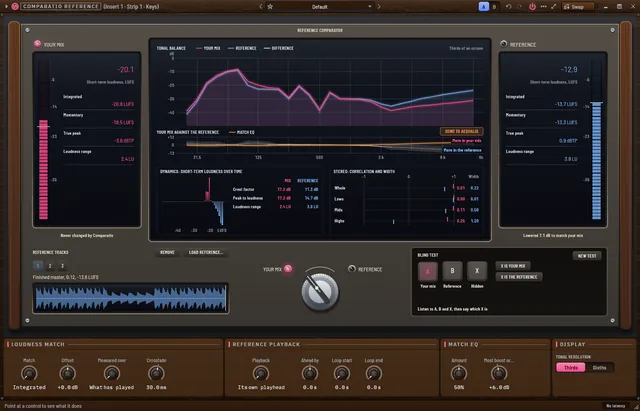
Your mix beside the records you love, at the same loudness: switch without a click, see where the tone, the loudness, the dynamics and the stereo part ways, send the difference to an EQ, and test your ears blind.
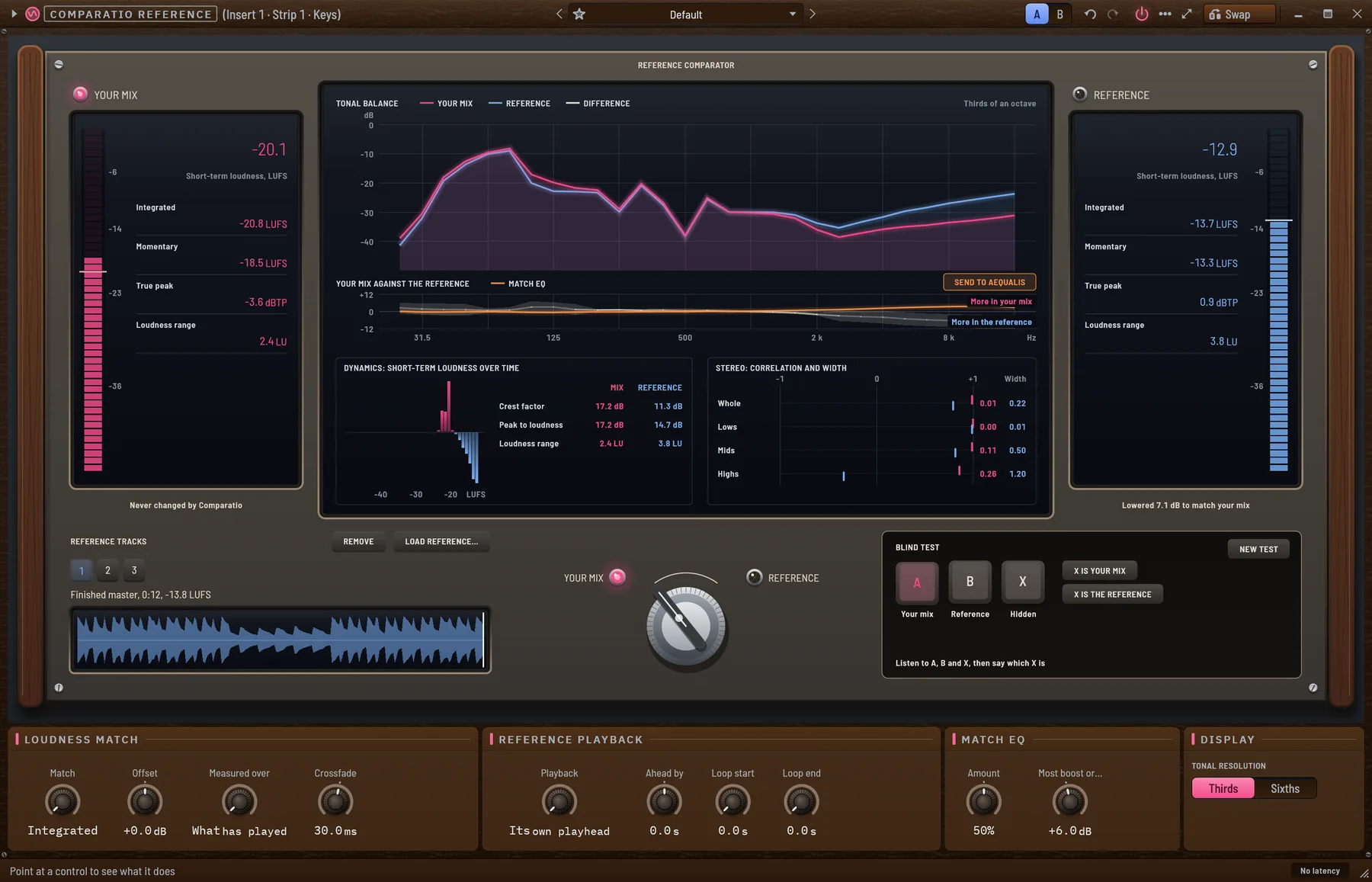
Comparatio sits on the master's last insert and holds up to eight reference tracks, each a file read from your disk and never copied into the project. Press the big selector and you hear the reference instead of your mix, matched to your mix's loudness — by its integrated loudness, section by section, or by hand — through a crossfade too smooth to click; press it again and your mix is back, to the bit. Between the two decks, a dark screen draws both tonal balances (the reference's from its whole file, yours as it plays), their difference with how sure it is, and the match EQ that would bring yours toward it, sent to an Aequalis before Comparatio as editable bands with one click. The decks read short-term, integrated and momentary loudness, true peak and loudness range; the screen adds crest factor, peak to loudness, the two loudness histograms, and correlation and width in three bands. A blind drawer runs an ABX test and tells you the chance you were guessing. Renders, exports and freezes always hear your mix, never a reference. Its CLAP and VST3 plug-in loads references by path with their size and hash, and says plainly when a file is missing or changed.
What stands out
- Matched within 0.1 LU (integrated, short-term or by hand); a switch at −94 dBFS of click
- Up to eight references, each with its own analysis; drop a file on it or load one
- Tonal balance and difference in thirds or sixths of an octave, with how sure it is
- Match EQ drawn before it is sent; Send to Aequalis puts editable bands before it
- EBU loudness, true peak, crest, histograms, correlation and width in three bands
- Blind ABX with the exact chance of guessing; renders never hear a reference